
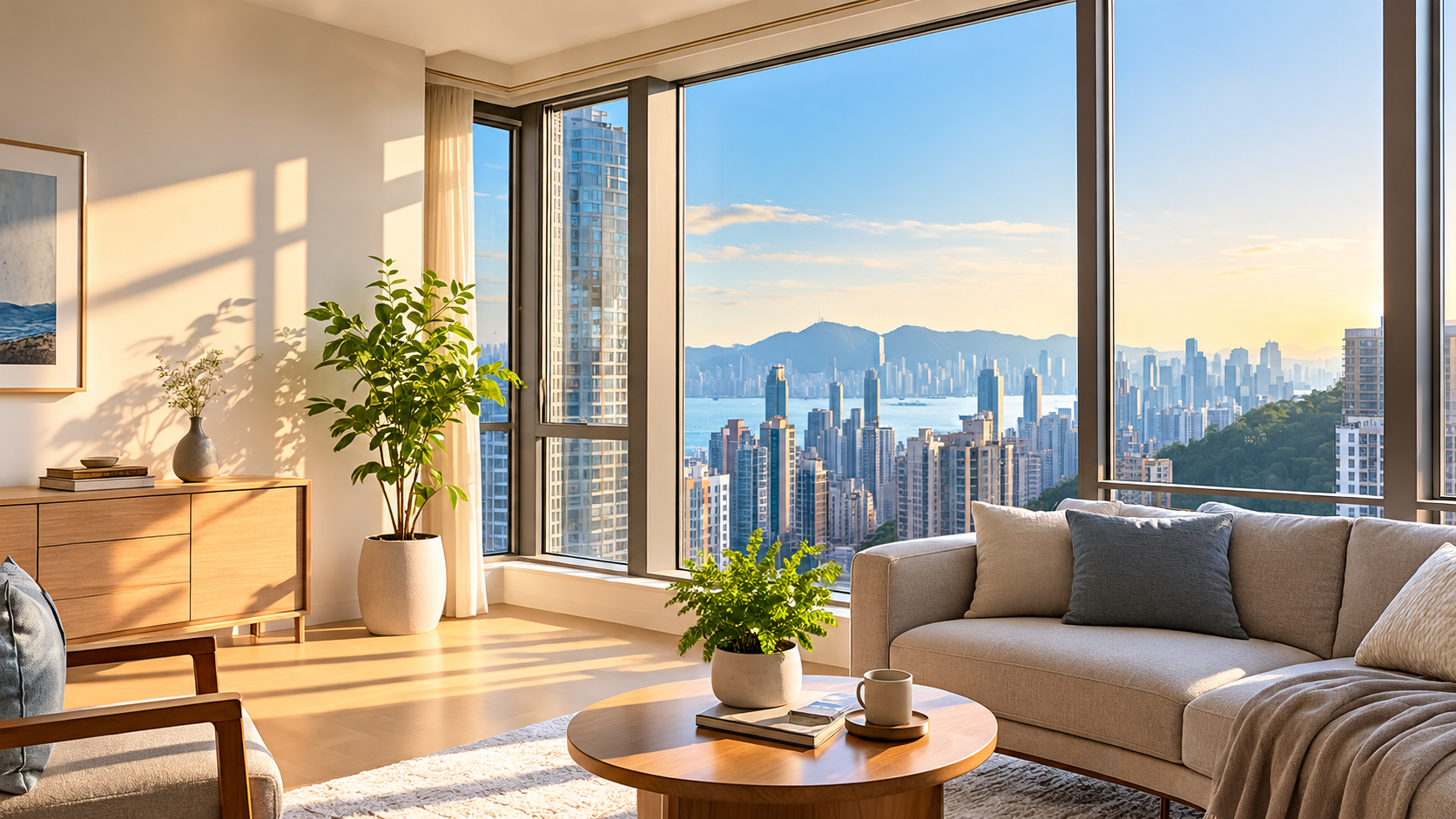
Two apartments may have the same floor area, similar finishes and equally convenient addresses. Visit them at nine in the morning, however, and one may feel calm and welcoming while the other needs every ceiling light switched on. Return late in the afternoon and the impression may reverse. In Hong Kong, where homes sit close to neighbouring towers and valuable floor space is measured carefully, sunlight is not a minor decorative detail. It shapes how rooms are used, how warm they feel and whether a home works with your daily routine.
Start With the Sun, Not the Sales Brochure
The phrase “south-facing” sounds reassuring, but a compass alone cannot tell you what a room will feel like. Hong Kong’s sun changes position with the seasons. In winter it follows a lower path through the southern sky, and direct light can reach further into suitable south-facing windows. In summer it travels far higher, and around the summer solstice the midday sun can even sit slightly to the north. A room’s exposure therefore changes over the year. Window size, depth, balconies and neighbouring buildings can be as influential as the direction printed on a floor plan.
East: A Natural Fit for Morning Routines
An east-facing window often welcomes direct light earlier in the day. That may suit someone who enjoys breakfast by the window, works at home in the morning or wants a naturally bright start before commuting. By late afternoon, an east-facing living room may avoid the strongest direct western sun. Yet “east-facing” does not automatically mean “sunrise view”: a tower across the street can intercept the low morning sun. Check whether daylight reaches the breakfast table, not just the window.
West: Beautiful Evenings, With a Heat Trade-off
West-facing rooms can be memorable at sunset. The view may turn golden just as the household gathers for dinner, giving the space a distinctive atmosphere. The same low-angle afternoon sunshine, however, may produce glare and add heat through exposed windows. Warmth can linger after sunset, especially where shading is limited. Rather than reject every west-facing flat, examine its design: external overhangs, recessed windows, blinds, glazing, wall exposure and the ability to ventilate can change the experience. A sunny late-afternoon visit is much more informative than a carefully exposed marketing photograph.
South: Winter Sunshine, but No Universal Guarantee
South-facing homes attract attention for a reason. During Hong Kong’s cooler months, the lower southern sun may illuminate a living room and lend it a pleasant sense of warmth. Still, south-east and south-west windows have different daily patterns, while a south-facing room behind a deep balcony can receive less direct light than expected. A nearby block or hillside may obstruct the sun entirely for part of the day. Instead of asking whether a flat is “the best direction”, ask which room faces south, what sits outside it and when the sunlight arrives.
North: Soft Daylight Can Be an Advantage
North-facing space may offer gentler, more diffuse daylight for much of the year. For a desk, art materials or a television area, that can make glare easier to manage. The potential drawback is not the label “north” itself but a restricted view of the sky, especially across a narrow light well or between closely packed buildings. Also remember that around early summer, some north-facing windows may receive direct sun. A bright north-facing room with open sky can be more enjoyable than a supposedly desirable orientation looking straight into another wall.
The Fifth Direction: What Is Directly Outside the Window?
Hong Kong’s vertical landscape makes the outlook crucial. One floor may clear the podium opposite; another may face its concrete edge. A deep balcony can shade a room, while a corner unit may receive daylight from more than one direction. Look beyond the view photograph and stand in the middle of the living room. How much sky is visible? Do the bedrooms receive usable daylight? Is privacy so limited that curtains would remain closed throughout the day? The most valuable window is not necessarily the biggest; it is the one that lets you comfortably use the room.

Do Not Confuse Sunlight With Fresh Air
A sun-filled room can still feel stuffy. Ventilation depends on whether windows can be opened, the direction of prevailing winds, the surrounding buildings and the route air can take through the interior. Cross-ventilation may be possible where openings are suitably positioned, but a bright single-aspect apartment should not be assumed to have it. During a viewing, check window operation where it is safe to do so and listen for road noise when the window is open. Light, airflow, privacy and noise are separate qualities; a comfortable home balances all four.
A More Revealing Way to View a Flat
For a serious contender, try to visit at two different times—ideally one morning and one late afternoon. Switch off the interior lights for a moment and observe whether the back of the room remains usable. Look for hard reflections on screens, hot spots near glazing and heavy curtains that appear permanently drawn. A phone compass can provide a rough indication, although nearby metal may affect readings. Ask what lies beyond the visible buildings, including any development that could alter the outlook. A second visit can be revealing.
Match the Light to the Life You Actually Lead
The ideal exposure is personal. Someone working remotely may prefer steady light without glare at the desk. A household with young children may be more concerned about afternoon heat in the living room. A person who spends most daylight hours away may place greater importance on ventilation, evening comfort and bedroom privacy. Compare shortlisted flats room by room: the actual window direction, nearby obstruction, brightness, likely heat and the hours when each space matters most. Compare your notes side by side.
The PropMark View: Comfort Is More Than a Compass Point
A good home does not need to face a universally celebrated direction. It needs the right combination of daylight, shade, fresh air, privacy and practical layout for the people living there. In Hong Kong, the most important detail may be the tower opposite rather than the arrow on the floor plan. PropMark encourages buyers and tenants to consider the wider neighbourhood and the lived experience of a flat, not just its specifications. Choose the home whose light feels right at the hours that matter to you.