
Hong Kong’s residential real estate market has arrived at a rare structural divergence. While capital values have continued through an extended consolidation phase amid ample primary supply, the residential leasing sector has performed with remarkable resilience. Driven by an influx of mainland professionals under various talent admission initiatives and sustained demand from non-local university students, […]

The Fed raised rates on 16 September 2026 and the HKMA Base Rate followed, but Hong Kong prime rates did not move. How a US hike actually reaches a Hong Kong mortgage, what would change that, and what the data show so far.

Forty-three sales and thirty-six lettings were recorded on the Southside in the three months to 15 September 2026. This is that record read band by band — HK$15 to 30 million, HK$30 to 50 million and above, and rents from HK$40,000 to over HK$120,000 — set against what is currently on the market and three scenarios for the rest of the year.

Three months of registered transactions show the two nets charge within HK$28 per square foot of each other for Mid-Levels floor space — and that every headline price gap between them is a difference in flat size, layout and building age, not in the value of the postcode.
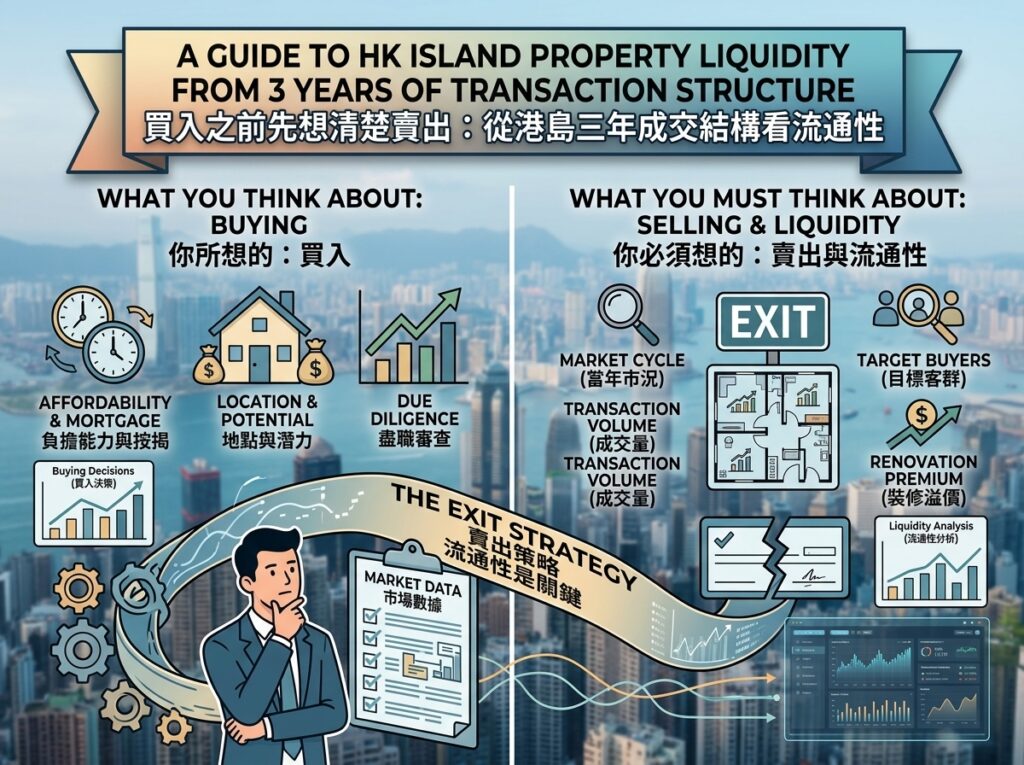
Most Hong Kong buyers study price per square foot and skip a harder question: how many buyers will exist for this flat when it is their turn to sell. Three years of registered Hong Kong Island transactions give a surprisingly clear answer.
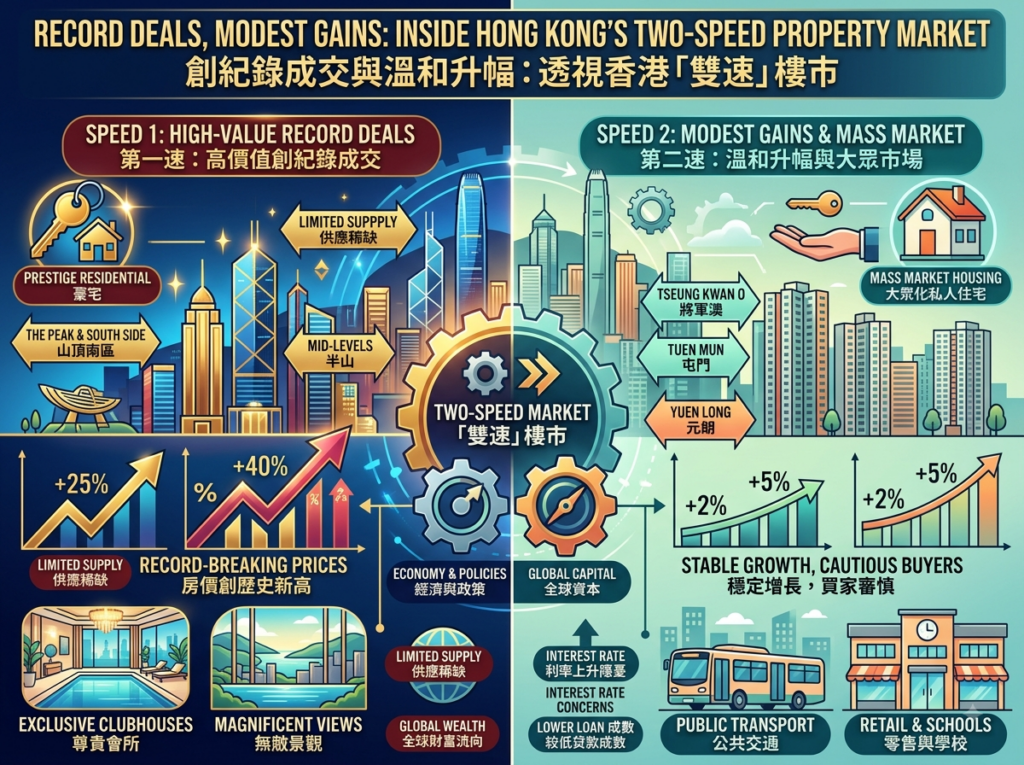
Transaction volumes and cross-border buying set records in the first half of 2026, yet official price growth stayed modest and forecasters expect the second half to cool. A look at what the public data shows — and what it cannot.
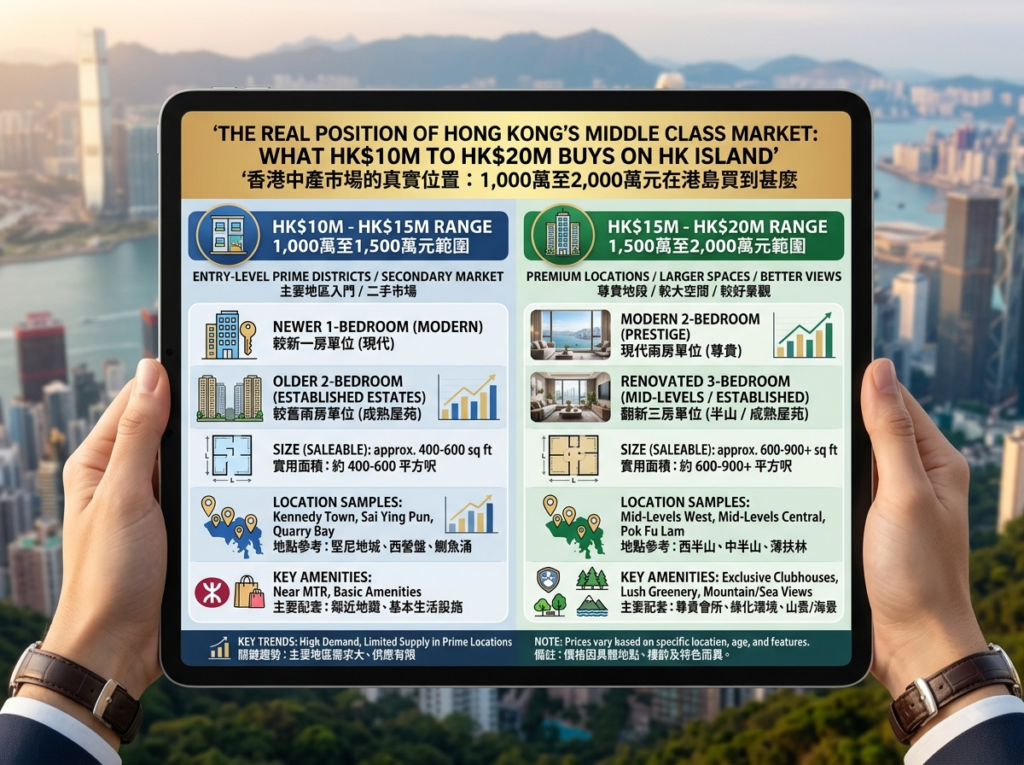
Hong Kong’s property debate happens at the extremes, but most established households buy in the middle. Registered transaction data shows what HK$10–20 million actually buys on Hong Kong Island — and why age, not district, sets the price.
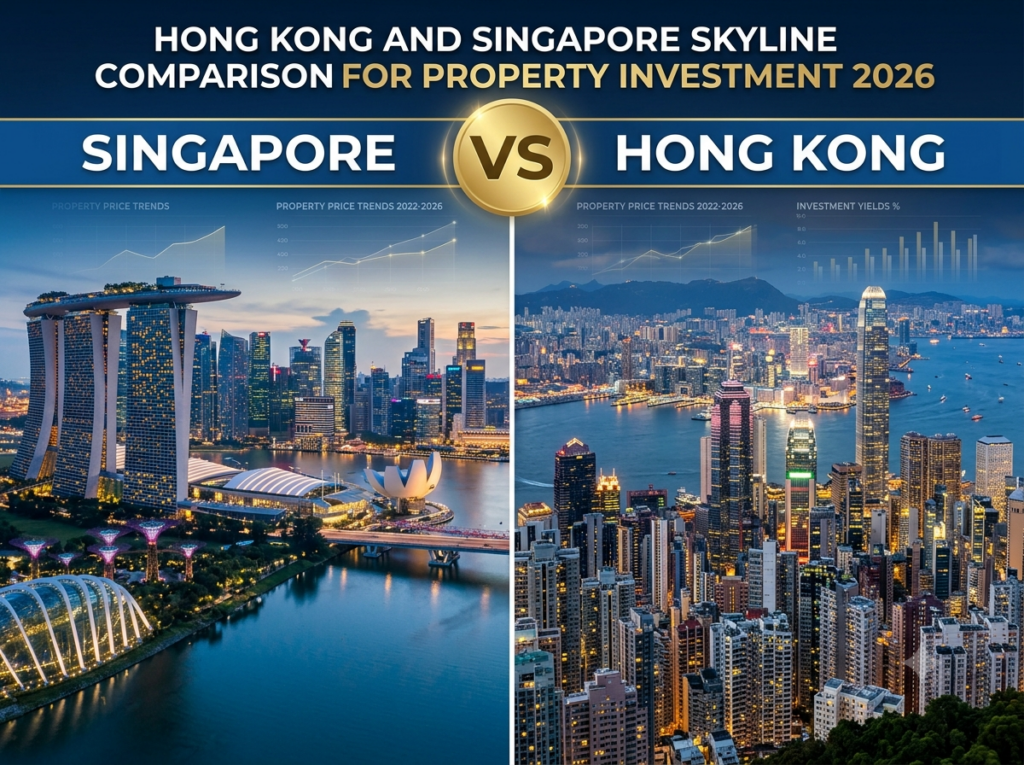
For internationally-mobile professionals in Asia, the Hong Kong vs Singapore property question comes up constantly. In 2026, the two markets are at starkly different points: one in confirmed recovery, the other plateauing under heavy cooling measures. Here is the data-driven comparison expat investors need.
For much of 2023 and 2024, Hong Kong’s property market was a study in patience. High interest rates, geopolitical uncertainty, and a subdued post-pandemic economy kept buyers on the sidelines and pushed prices steadily lower from their 2021 peaks. The correction was long, orderly, and — for those willing to wait — an opportunity.